Category Archives: Uncategorized

Does Consciousness Cause Our Decisions? Understanding Libet’s Experiment

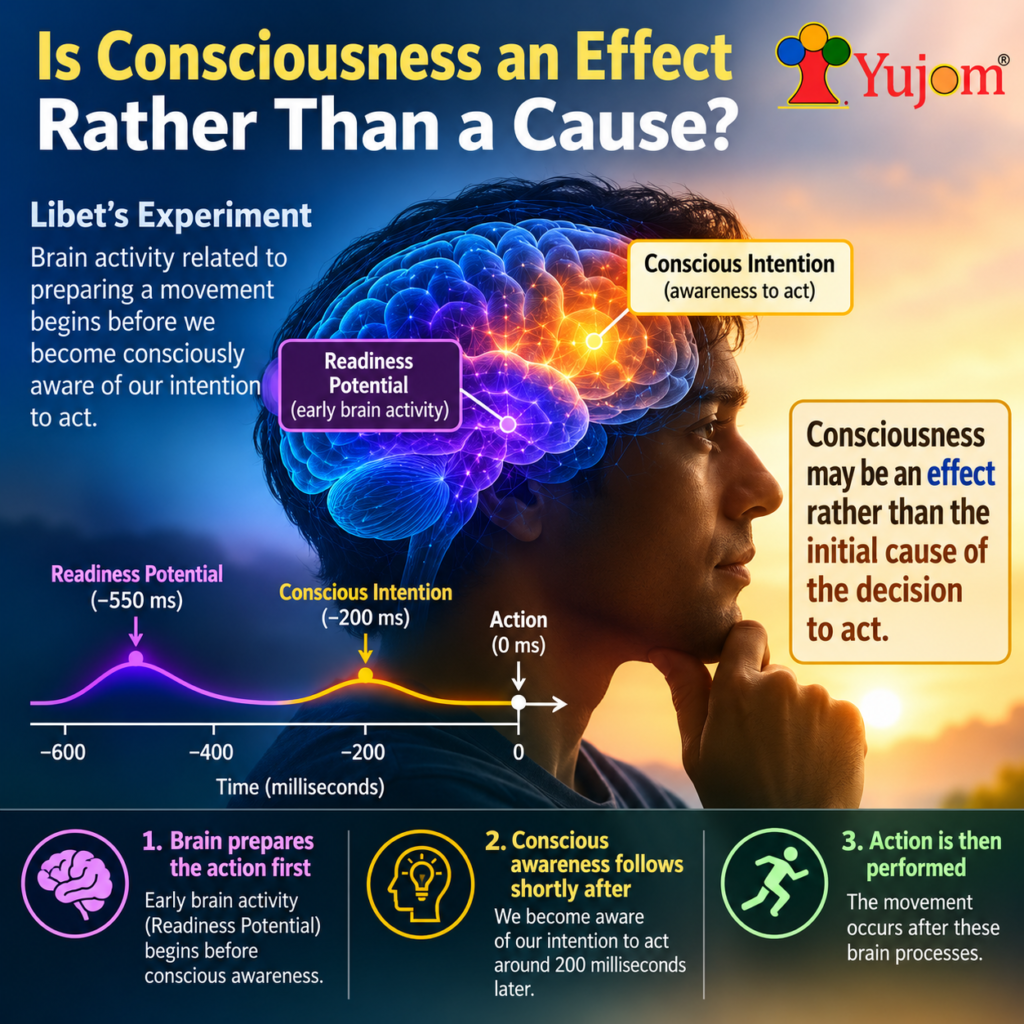
Does Consciousness Cause Our Decisions? Understanding Libet’s Experiment Can the brain begin preparing an action before we consciously decide to act? This fascinating question lies at the heart of neuroscientist Benjamin Libet’s famous experiments on consciousness and voluntary action. What Did Libet’s Experiments Suggest? In Libet’s experiments, participants performed simple voluntary movements, such as moving […]
Electrical Stimulation of the Pons–Midbrain Junction: Understanding the Reticular Activating System

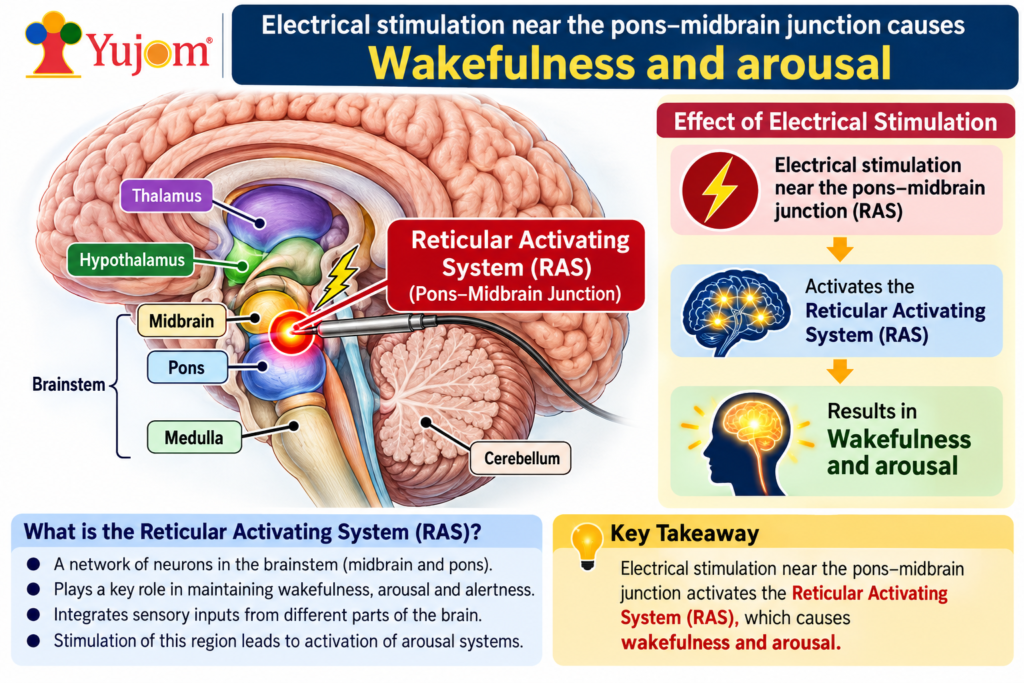
Electrical Stimulation of the Pons–Midbrain Junction: Understanding the Reticular Activating System The Brain’s Wakefulness and Arousal System Wakefulness is not simply the absence of sleep. It is an active brain state supported by specialized neural systems that maintain alertness, arousal, attention, and consciousness. One important system involved in this process is the Reticular Activating System […]

Global Workspace Theory: How the Brain Creates Consciousness

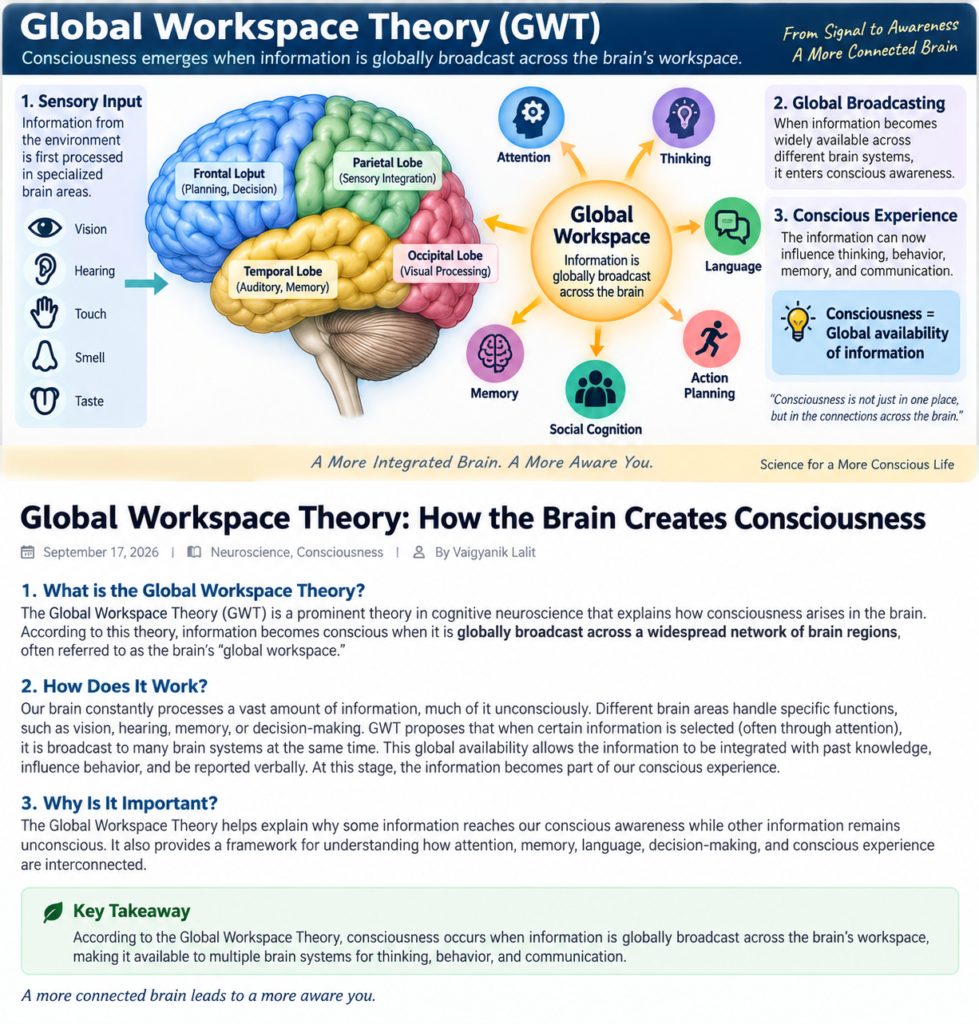
Global Workspace Theory: How the Brain Creates Consciousness Global Workspace Theory (GWT) is an influential theory in cognitive neuroscience that explains how information may become part of our conscious experience. Our brain continuously processes a huge amount of information. Much of this processing occurs without conscious awareness. According to GWT, information becomes conscious when it […]

Neocortex: The Brain’s Center for Higher Cognitive Functions

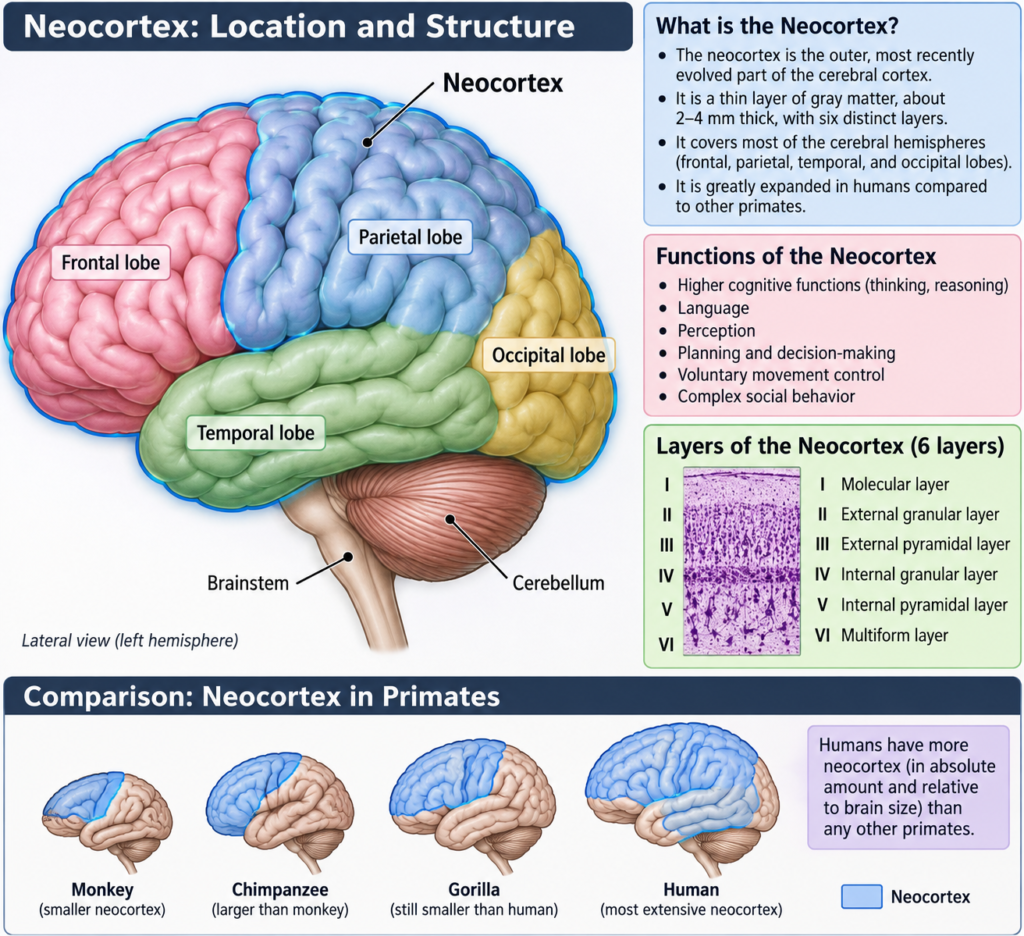
Neocortex: The Brain’s Center for Higher Cognitive Functions The neocortex is the outer layer of the cerebral cortex and one of the most important parts of the human brain. It plays a major role in higher cognitive functions such as thinking, reasoning, perception, language, planning, decision-making, and voluntary movement. The neocortex is organized into six […]

Imagination During Yujom® DreamSleep®

Imagination During Yujom® DreamSleep® Imagination is Not Limited to Visual Images When people hear the word “imagination,” they often think only about visual images — pictures, scenes, colors, shapes, or faces appearing in the mind. However, mental imagery is not limited to sight or vision. Human imagination can also include sound, touch, taste, smell, emotion, […]

Visual Thinking and the Kalpdroom® Science System

Visual Thinking and the Kalpdroom® Science System English Visual thinking is an important ability for researchers, engineers, designers, and innovators. It helps a person mentally rotate, connect, compare, and reorganize different components before creating or testing them in the real world. This ability is especially valuable in fields such as geometry, mechanisms, spatial systems, architecture, […]

Creative Engineer: Intellectual Integrity, Meaningful Goals and the Kalpdroom® Science System

Creative Engineer: Intellectual Integrity, Meaningful Goals and the Kalpdroom® Science System English A creative engineer is not only a person who can design something technically clever. True creativity in engineering requires a meaningful direction. A technically impressive design may still be weak if it does not solve a useful problem, serve human life, or contribute […]

perception is like a problem solving

Problem solving (સમસ્યા ઉકેલવાની પ્રક્રિયા) Helmholtz મુજબ, perception માત્ર આંખમાંથી મળેલી sensory informationની સીધી નકલ નથી. Sensory information ઘણી વખત અધૂરી અથવા ambiguous હોય છે. તેથી મગજ: મળેલી sensory informationનું વિશ્લેષણ કરે છે, ભૂતકાળના અનુભવનો ઉપયોગ કરે છે, અચેતન અનુમાન કરે છે, અને stimulusનું સૌથી સંભવિત કારણ નક્કી કરે છે. આ પ્રક્રિયા સમસ્યા ઉકેલવા જેવી […]

Unconscious assumptions about the environment

Unconscious assumptions about the environment According to Helmholtz’s theory of unconscious inference, sensory information received by our eyes is often incomplete or ambiguous. The brain therefore uses past experience and unconscious assumptions about the environment to construct the most likely perception. For example, when one object partly covers another, we usually perceive the covered object […]